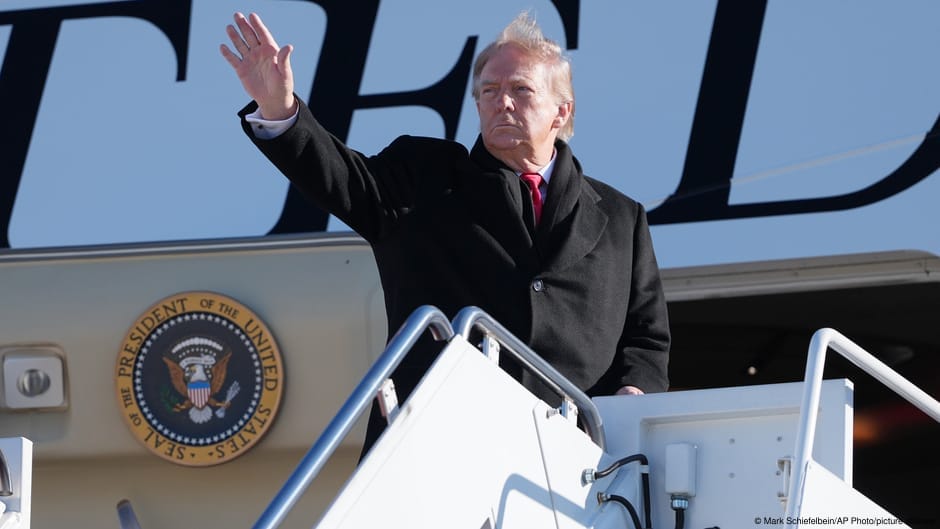
President Trump began a whirlwind Asia trip on Tuesday in Manila, where he is scheduled to meet President Ferdinand R. Marcos Jr. of the Philippines and attend a gathering of Southeast Asian leaders. The itinerary is brief, with less than 24 hours in the Philippines before he heads to the APEC economic summit in Shenzhen, China. The agenda is unpredictable and could touch on the future of American tariffs, nuclear arms control and U.S. restrictions on advanced artificial intelligence chips.
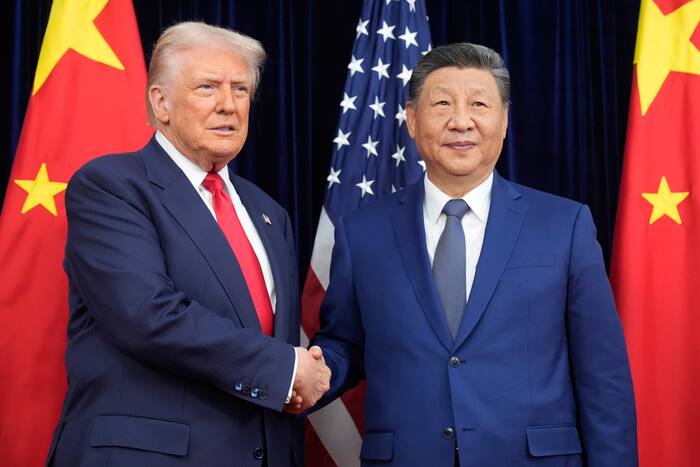
The centerpiece of the trip is an expected meeting on Thursday with President Xi Jinping of China and President Vladimir V. Putin of Russia, which would be the first time the three leaders have sat down together. The gathering has drawn comparisons to the 1945 Yalta conference, though analysts note the analogy has limits, since no one expects the leaders to redraw any continent's borders. The White House says Mr. Trump wants to discuss the threat of nuclear proliferation and the war against Iran. U.S. officials do not expect a deal, describing the meeting as a starting point, and Ukraine is not expected to be part of the discussion, a development that has raised concern in Kyiv.S1S2
The nuclear backdrop is stark. U.S. officials have voiced concern about China's accelerating nuclear buildup, which is expected to reach 1,000 warheads by 2030, while China has an estimated 620 warheads compared with more than 5,000 each for Russia and the United States, according to the Stockholm International Peace Research Institute. The last nuclear arms control treaty between Washington and Moscow expired in February, and administration officials say any new agreement must include China, though Beijing has shown no interest.S2
The trip also carries trade stakes. Mr. Trump must extend a soon-expiring truce that limited tariffs on Chinese goods entering the United States, in exchange for a Chinese commitment not to cut off rare earth exports. In Shenzhen, the heart of China's robotics and artificial intelligence industries, he is expected to pursue détente with Mr. Xi. Southeast Asian leaders will be watching for signs that Republican losses in the midterm elections may have humbled Mr. Trump, whose tariffs on regional countries, including allies, have fed a sense in Asia that Washington values commerce over security.S1S2
Mr. Trump will also meet leaders of the Quad, comprising the United States, India, Japan and Australia, all of which are grappling with high energy prices triggered by the Iran war that began in late February. The trip is a pivot to foreign policy after voters delivered a swift rebuke to his party in the midterms, and it comes as his administration faces scrutiny over a scandal involving the former chief executive of Nvidia, which has raised questions about Chinese espionage and American tech exports.S1S2