The brief
Bond traders are reassessing their strategies following an inflation shock linked to rising oil prices amid the ongoing conflict in Iran.
Context
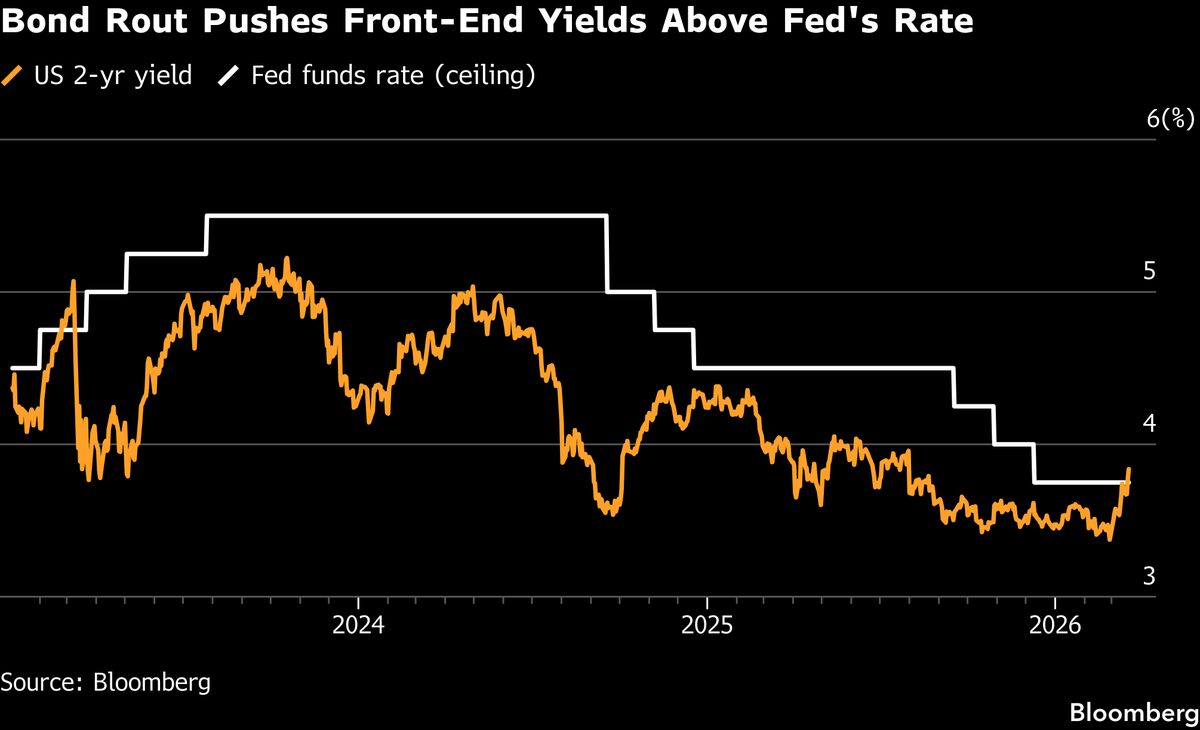
The bond market had previously anticipated further interest-rate cuts from the Federal Reserve, but the recent surge in oil prices has altered this outlook significantly.S1S2
Key points
- The war in Iran has contributed to a spike in oil prices, impacting inflation expectations.S1S2
- Traders are now scrambling to adapt their strategies in response to this inflation shock.S1S2
- The anticipated interest-rate cuts by the Federal Reserve are now in question due to these developments.S1S2
- The bond market's previous bets on lower rates have been disrupted by the oil price surge.S1S2
- Inflation driven by oil prices is a significant concern for economic stability.S1S2
- Market participants are closely monitoring the situation for further developments.S1S2
- The conflict in Iran is a key factor influencing global oil supply and prices.S1S2
- This situation highlights the interconnectedness of geopolitical events and financial markets.S1S2
Why it matters
- Understanding the bond market's reaction to oil prices is crucial for investors making future decisions.S1S2
- The shift in interest-rate expectations can have widespread implications for the economy.S1S2
- Monitoring inflation trends is essential for assessing the overall economic outlook.S1S2
What to watch
- Watch for updates on the conflict in Iran and its impact on oil prices.S1S2
- Keep an eye on Federal Reserve communications regarding interest rates.S1S2
- Observe how bond traders adjust their strategies in response to ongoing market changes.S1S2